

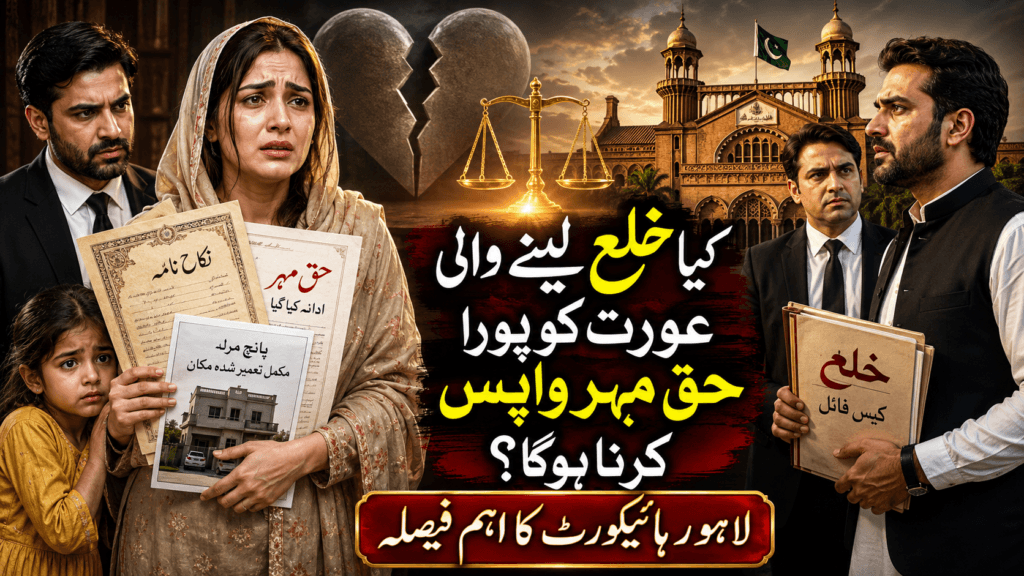
A woman may seek Khula because she simply cannot continue the marriage, but sometimes she enters the Family Court after cruelty, abandonment, non-maintenance or unsafe conduct has made married life unbearable. This distinction matters because it can affect not only the dissolution of marriage but also the amount of Haq Mehr she may be required to return.
The Lahore High Court examined this issue in Mohammad Mohsin Raza v. Additional District Judge, Jatoi, reported as PLD 2025 Lahore 551. The judgment shows that Grounds for Khula in Pakistan cannot be treated as a mechanical checklist. A court must examine why the marriage failed, what each spouse did, what evidence was produced and whether the wife was compelled to seek Khula.
The wife alleged physical torture, expulsion from the matrimonial home while pregnant, non-maintenance, drug addiction and bad character. The husband argued that because she obtained Khula, she must return the entire paid dower and surrender the unpaid dower.
The courts found that the husband was more at fault. The wife therefore retained 75% of her admissible dower and surrendered only 25%.
The message is important: obtaining Khula does not automatically erase a woman’s financial rights.
Table of Contents
IRAC Analysis: How the Court Decided Dower After Khula
| Element | Explanation |
|---|---|
| Issue | Whether a wife who obtains Khula must return the whole Haq Mehr, and how her reasons for seeking dissolution affect the amount. |
| Rule | The Family Court may determine the return or surrender of dower according to the evidence, circumstances and relative fault of both spouses. |
| Analysis | The wife substantially proved cruelty, expulsion, non-maintenance and allegations of drug use. She was not shown to be entirely blameless, but the husband was more responsible for the breakdown. |
| Conclusion | The wife received 75% of the unpaid dower and surrendered 25%. The husband’s petition was dismissed. |
Judgment at a Glance: Khula and Dower Rights in Pakistan
| Point | Details |
|---|---|
| Case | Mohammad Mohsin Raza v. Additional District Judge, Jatoi and others |
| Citation | PLD 2025 Lahore 551 |
| Court and Judge | Lahore High Court, Justice Abid Hussain Chattha |
| Petition | Writ Petition No. 12505 of 2020 |
| Date of Hearing | 17 October 2022 |
| Main Dispute | Return or surrender of Haq Mehr after Khula |
| Dower Recorded | Rs. 5,000, three tolas of gold and a five-marla constructed house |
| Family Court Relief | Khula, maintenance, dowry value and 75% of unpaid dower |
| Final Result | Husband’s petition dismissed; lower courts’ decisions maintained |
Background of the Marriage Dispute
The wife filed a family suit for dissolution of marriage, recovery of Haq Mehr, maintenance and dowry articles. She also claimed maintenance for the minor child. The marriage was dissolved on 19 January 2018.
The Family Court awarded the minor child Rs. 4,000 per month with a 10% annual increase. The wife received Rs. 15,000 as Iddat maintenance and Rs. 100,000 as the alternative value of dowry articles.
The Nikahnama recorded Rs. 5,000, three tolas of gold and a five-marla constructed house as dower. The husband admitted the cash and gold but denied that the house was part of the Haq Mehr.
The Court rejected this oral denial because the original Nikahnama carried greater evidentiary value. A husband could not remove a written property obligation from the Nikahnama through a simple verbal statement.
The wife was granted 75% of the unpaid house, equal to three marlas and seven sarsais, or its value according to the applicable official price schedule. Both parties filed appeals, but the appellate court dismissed them.
What Grounds Did the Wife Take for Khula?
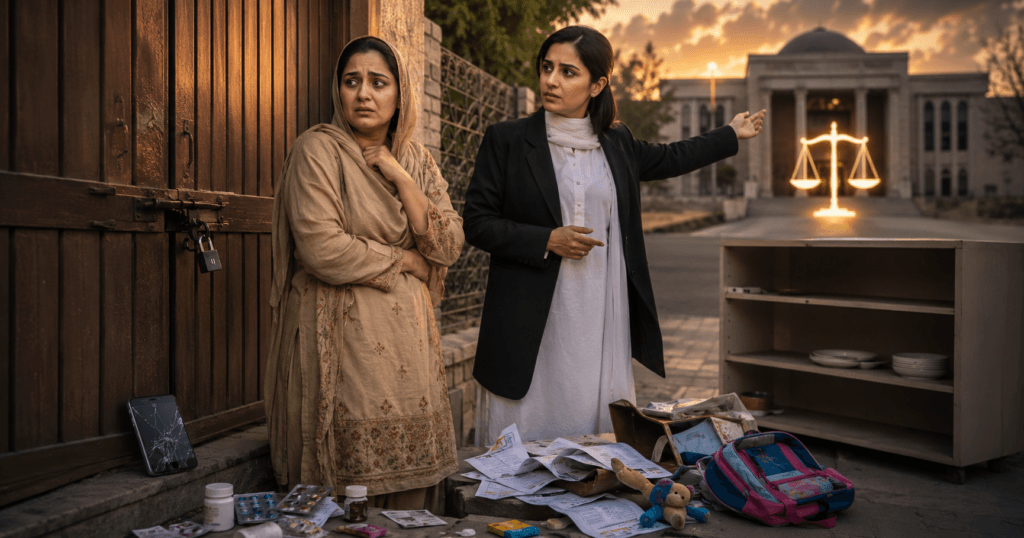
The wife did not present a case based merely on personal dislike. She alleged:
- Habitual physical torture and cruelty;
- Expulsion from the matrimonial home while four months pregnant;
- Failure to bring her back or make a genuine attempt at reconciliation;
- Refusal to maintain her and the minor child;
- Drug addiction and bad character; and
- Inability to continue married life within the limits prescribed by Allah.
These Grounds for Khula in Pakistan mattered because they helped the Court determine who was responsible for the failure of the marriage.
The wife repeated these allegations in her testimony and produced a supporting witness. The husband gave an evasive denial and did not effectively rebut the accusations through his own evidence.
The High Court did not hold that every allegation had been conclusively proved. However, it found that the wife had substantially established why she sought Khula and that the husband was proportionately more at fault.
Recognized Grounds for Dissolution of Marriage
Section 2 of the Dissolution of Muslim Marriages Act, 1939 recognizes several circumstances in which a Muslim woman may obtain dissolution of marriage.
These include:
- Disappearance of the husband;
- Failure to provide maintenance;
- Long imprisonment;
- Failure to perform marital obligations;
- Impotence;
- Certain serious illnesses;
- An unlawful additional marriage;
- Lian;
- Cruelty; and
- Other valid grounds recognized under Muslim law.
Cruelty is wider than visible physical injury. It can include conduct that makes a wife’s life miserable, interferes with her rights or destroys the safety and dignity of married life.
Accordingly, Grounds for Khula in Pakistan may arise from physical, emotional, financial or behavioural harm.
Is Personal Dislike Enough for Khula?
A wife may seek Khula where she genuinely believes that she cannot live with her husband within the limits set by Allah.
However, the reason for seeking Khula may affect her entitlement to Haq Mehr.
Where the husband committed no fault and the wife seeks Khula only because of personal dislike, the Family Court may order her to surrender the entire dower.
Where the husband’s cruelty, neglect or misconduct compelled the wife to approach the Court, she may be allowed to retain all or part of the dower.
This is why proof of Grounds for Khula in Pakistan becomes crucial when Haq Mehr is also disputed.
How Grounds for Khula in Pakistan Affect Haq Mehr
The Lahore High Court explained three practical situations.
1. The Wife Was Not at Fault
If the wife was compelled to seek Khula because of the husband’s misconduct and she was not responsible for the breakdown, she may retain the complete dower.
2. The Husband Was Not at Fault
If the husband committed no fault and the wife sought Khula merely because of personal dislike, she may be ordered to surrender the complete dower.
3. Both Spouses Were at Fault
Where both spouses contributed to the failure of the marriage, the Court may order a proportionate return or surrender according to their respective responsibility.
This approach prevents automatic and unfair decisions. Two marriages may both end through Khula, but the circumstances leading to those cases may be entirely different.
Can Drug Addiction Support Grounds for Khula in Pakistan?
Drug addiction can become legally relevant when it results in violence, financial neglect, abusive conduct, instability or an unsafe home.
In this case, the wife accused the husband of drug use together with cruelty, bad character and non-maintenance.
A bare allegation is weaker than a specific and supported allegation. Dates, witnesses, complaints, messages, medical material or surrounding circumstances can strengthen the wife’s case.
When addiction destroys safety and support within the household, it may strengthen Grounds for Khula in Pakistan and influence the order concerning Haq Mehr.
The Court will normally assess the husband’s overall behaviour rather than examining each incident in complete isolation.
Is Non-Maintenance Among the Grounds for Khula in Pakistan?
Failure to provide maintenance is a recognized ground under the Dissolution of Muslim Marriages Act, 1939, subject to its statutory requirements.
Non-maintenance may also demonstrate that the husband abandoned his marital responsibilities.
In this case, the wife alleged that the husband failed to maintain her and the child after forcing her out of the matrimonial home. The Family Court separately granted maintenance to the minor child and Iddat maintenance to the wife.
When combined with pregnancy, expulsion or cruelty, non-maintenance may show that the wife did not approach the Family Court casually or without reason.
Husband’s Arguments
The husband mainly disputed the wife’s entitlement to 75% of the dower.
He argued that because the wife herself obtained Khula, she was required to return the paid dower and surrender the whole unpaid dower.
He relied on Imran Anwar Khan v. Government of Punjab, reported as PLD 2022 Federal Shariat Court 25. In that case, the Federal Shariat Court struck down the statutory upper limits relating to the surrender of dower.
The husband also denied that the five-marla constructed house had ever been fixed as Haq Mehr.
According to him, only Rs. 5,000 and three tolas of gold were agreed as dower, and both had already been paid.
Wife’s Arguments
The wife argued that complete surrender of dower is not automatic in every case of Khula.
She maintained that the Court must examine why dissolution was sought and assess the conduct of both spouses.
She relied on the original Nikahnama to prove that the five-marla house was part of her dower. She also relied on her evidence relating to torture, expulsion, non-maintenance and the husband’s conduct.
According to her, the concurrent findings of the Family Court and appellate court were supported by evidence and required no interference by the Lahore High Court.
Questions Before the Lahore High Court
The central legal question was:
What principles govern the return or surrender of dower after Khula in light of the Federal Shariat Court’s decision in Imran Anwar Khan?
The High Court considered whether:
- Islamic law fixes a rigid percentage for surrender of dower;
- A wife must always return the complete Haq Mehr;
- The relative fault of the spouses may be assessed;
- Evidence must be recorded where responsibility is disputed; and
- The Nikahnama proved the five-marla constructed house.
The Court’s Rule on Haq Mehr After Khula
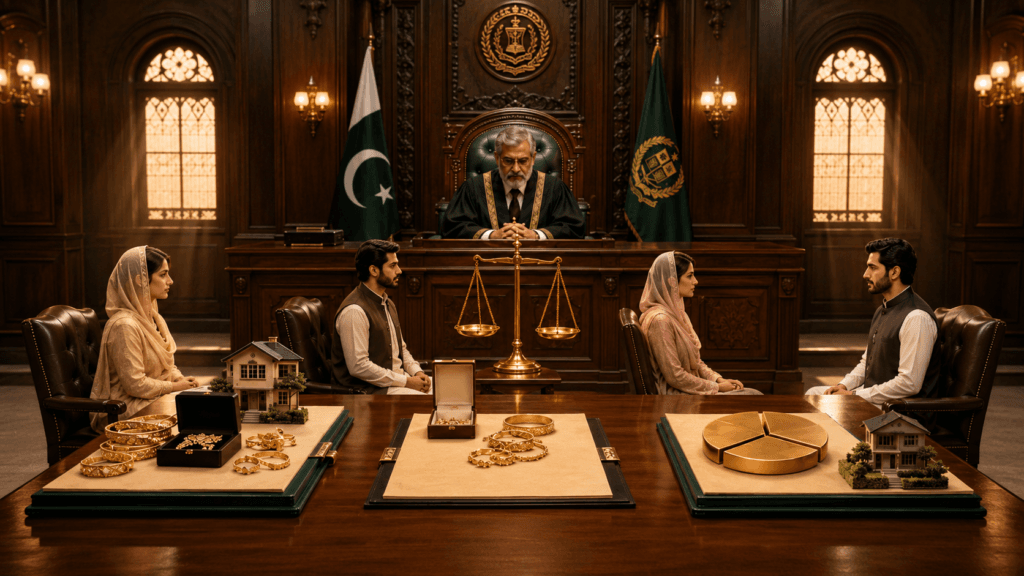
The Lahore High Court clarified that there is no universal percentage applicable to every Khula case.
The earlier statutory ceilings allowed the Court to direct the surrender of up to 25% of prompt dower or up to 50% of deferred dower. These statutory limits were declared ineffective from 1 May 2022 by the Federal Shariat Court.
However, that ruling did not create a new rule requiring every wife to surrender the entire dower.
The Family Court must determine the appropriate amount according to Islamic principles, the available evidence and the relative fault of the spouses.
Therefore, evidence supporting Grounds for Khula in Pakistan can directly affect whether a wife retains the whole dower, part of it or none of it.
Why the Wife Retained 75% of Her Dower
The wife’s version was supported by her own testimony and another witness.
The husband did not specifically and effectively rebut the allegations of torture and cruelty. His explanation was that the wife had demanded Khula because her father had instigated her, but he did not give a convincing reason for such alleged instigation.
The Court therefore accepted that the wife had substantially proved her reasons for seeking Khula.
At the same time, the evidence did not conclusively establish that she was completely free from fault. The lower courts therefore adopted a proportional approach.
Because the husband was found more responsible for the breakdown, the wife retained 75% of the admissible dower and surrendered 25%.
This finding shows that Grounds for Khula in Pakistan may have a direct and measurable effect on a woman’s property rights.
In Punjab, the law also sets an upper limit on how much prompt dower a wife can be asked to return in khula. In 2026 SCMR 561, the Supreme Court applied that limit even though there was no rukhsati. Read how the Supreme Court cut 15 tolas of gold to 3.75.
Why the Nikahnama Was Decisive
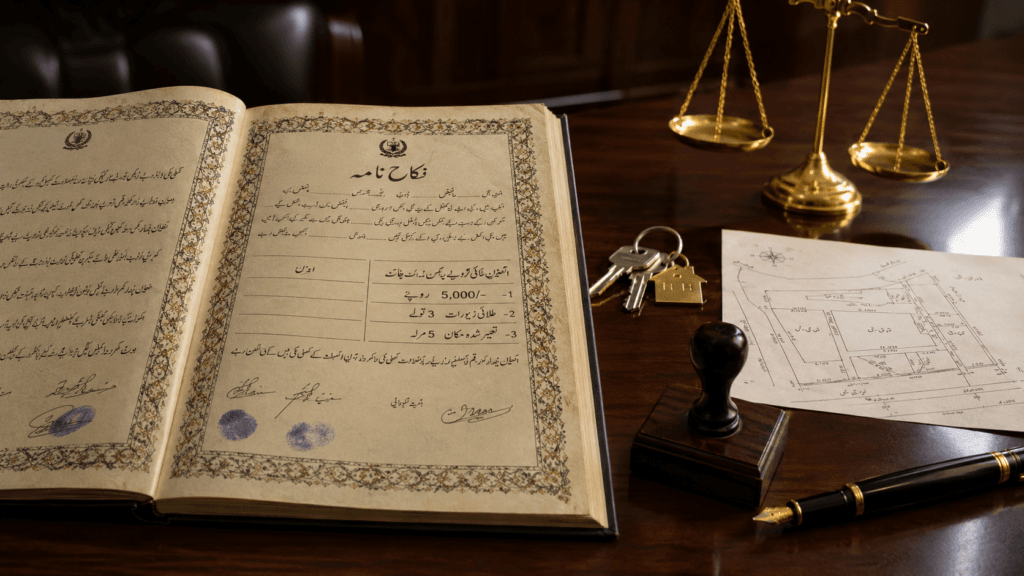
The original Nikahnama recorded Rs. 5,000, three tolas of gold and a five-marla constructed house.
The husband’s oral denial could not override its written terms.
A Nikahnama is not merely a ceremonial document. It may determine important financial rights several years after the marriage.
Entries relating to prompt dower, deferred dower, property and special conditions should therefore be written clearly. The original Nikahnama or a certified copy should also be preserved carefully.
Where the Nikahnama records a house or other property as Haq Mehr, the husband cannot normally defeat that entry through an unsupported denial.
Evidence Checklist for Grounds for Khula in Pakistan
A woman relying on cruelty, non-maintenance, addiction or abandonment should preserve whatever evidence is legally available, including:
- Original or certified copy of the Nikahnama;
- Medical reports relating to physical violence;
- Police complaints or written applications;
- Messages, voice notes or threatening communications;
- Proof of separate residence or expulsion;
- Maintenance demands and financial records;
- Witnesses with personal knowledge;
- Legally obtainable evidence of drug addiction;
- Birth documents of the children;
- Documents proving unpaid dower; and
- Evidence relating to dowry articles.
Not every case will contain every document. However, specific facts, consistent testimony and independent support are generally stronger than vague allegations.
Final Decision on Grounds for Khula in Pakistan
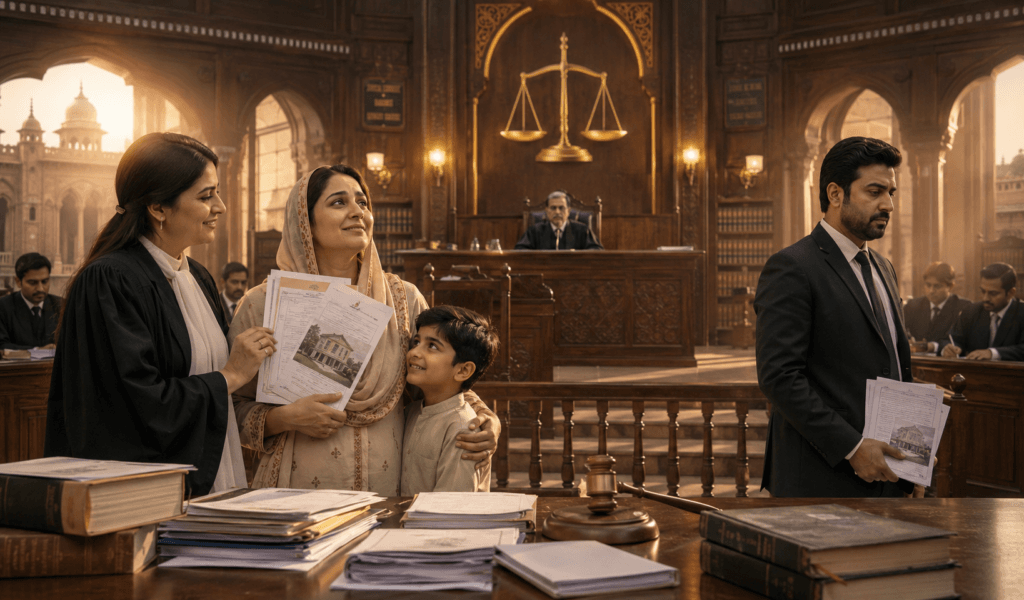
The Lahore High Court found no illegality, misreading, or non-reading of evidence in the decisions of the Family Court and appellate court.
The constitutional petition filed by the husband was dismissed.
The decree of Khula remained intact. The wife retained 75% of the unpaid dower represented by the house and surrendered 25%.
The orders relating to maintenance and dowry articles also remained undisturbed.
The decision confirms that Grounds for Khula in Pakistan are relevant not only to ending a marriage. They may also determine the financial consequences that follow the dissolution.
The judgment rejects two extreme assumptions. Every woman who seeks Khula does not automatically lose her entire Haq Mehr. At the same time, Khula does not always come without any financial consequence.
The correct result depends on the evidence, the cause of the marital breakdown and the relative fault of both spouses.
Conclusion
Grounds for Khula in Pakistan must be examined together with the real facts of the marriage.
Cruelty, non-maintenance, expulsion, drug addiction and abusive behaviour may explain why a woman entered the Family Court. They may also determine what happens to her Haq Mehr.
PLD 2025 Lahore 551 establishes a balanced rule. The Court should not apply a fixed formula blindly. It should examine the evidence, identify the relative fault of each spouse and then decide whether the wife should surrender all, part or none of her dower.
A woman who was forced to seek Khula because of her husband’s misconduct should not automatically be treated in the same way as a wife who sought Khula without any fault on the husband’s part.
Disclaimer: This article is for legal awareness only. Every family dispute depends on its own facts, documents and evidence. Consult a qualified family lawyer for advice regarding a particular case.
Frequently Asked Questions
What are the main Grounds for Khula in Pakistan?
They may include cruelty, non-maintenance, abandonment, failure to perform marital obligations, drug addiction, abusive conduct and a genuine inability to live with the husband within the limits prescribed by Allah.
Must a wife prove cruelty before obtaining Khula?
Not necessarily. A wife may obtain Khula where she genuinely cannot continue the marriage. However, proving cruelty may affect whether she has to return her Haq Mehr.
Does a woman lose her entire Haq Mehr after Khula?
No. The Family Court may allow her to retain all or part of the dower depending on the evidence and relative fault of the spouses.
Can a wife keep full Haq Mehr if the husband was cruel?
Yes. If the evidence establishes that the wife was not at fault and was compelled to seek Khula because of the husband’s conduct, the Court may permit her to retain the complete dower.
Is drug addiction one of the Grounds for Khula in Pakistan?
Drug addiction may support a Khula case where it causes cruelty, neglect, financial harm, instability or unsafe living conditions. Supporting evidence makes the allegation stronger.
What happens if both spouses are at fault?
The Family Court may assess their relative responsibility and order a proportionate return or surrender of Haq Mehr.
Can oral evidence defeat an entry in the Nikahnama?
A simple oral denial is generally insufficient where the original Nikahnama clearly records the dower. Strong and convincing evidence is required to displace the written document.