
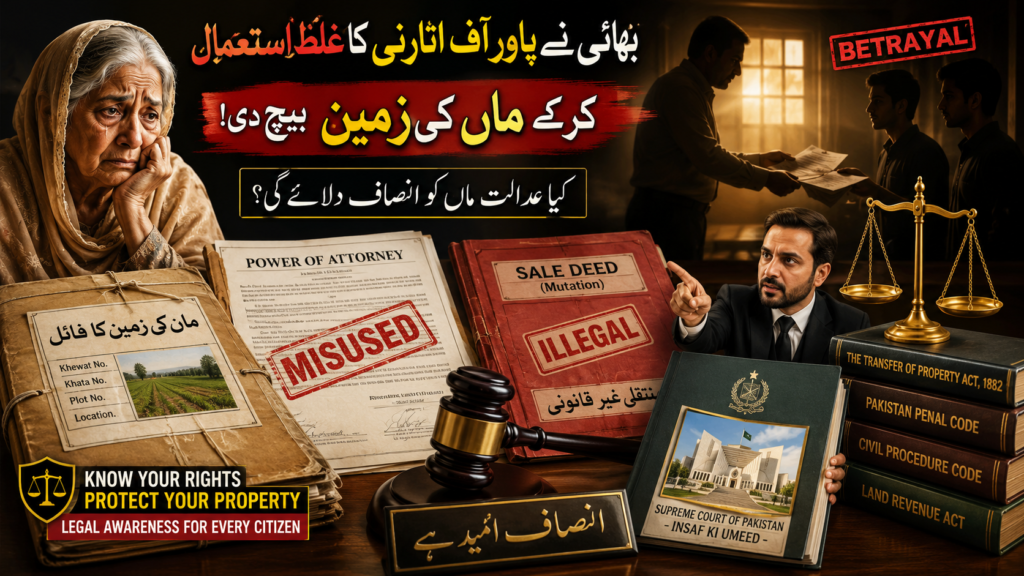
A power of attorney is created because one person trusts another. In many Pakistani families, a sister signs a document in favour of a brother, a mother trusts a son, or an elderly owner authorizes a close relative to handle land matters. But when that trust is misused, the document that was meant to protect property can become the very document used to take it away.
The Supreme Court judgment reported as 2024 SCMR 978 is a strong warning against Power of Attorney Misuse in Pakistan. In this case, Mst. Siraj Bibi gave a power of attorney to her brother, Fayaz Ahmed Khan. Instead of using it honestly, he used it to purportedly sell her land to his own four sons. The Court found that the power of attorney did not specifically authorize such a sale in favour of the attorney or his sons. The result was serious: the review petition was dismissed, possession was ordered to be handed over to the woman’s legal heirs, and Rs. 1,000,000 costs were imposed.
This judgment on Power of Attorney Misuse in Pakistan is important because it explains property rights, limits of attorney authority, illegal sale mutations, women’s property protection, and the duty of revenue officers in Pakistan.
Table of Contents
IRAC Analysis: How the Court Tested Misuse of Power of Attorney
| IRAC | Explanation |
|---|---|
| Issue | Whether an attorney could use a power of attorney from his sister to transfer her land to his own sons when the document did not specifically permit such a transaction. |
| Rule | Under section 215 of the Contract Act, 1872, if an agent deals in a way that benefits himself or connected persons without proper authority and disclosure, the principal can repudiate the transaction. |
| Analysis | Fayaz Ahmed Khan used his sister’s power of attorney to purportedly sell 109 kanals of land to his four sons. The document did not specifically authorize sale to the attorney or his sons. |
| Conclusion | The Supreme Court held that the power of attorney was misused, dismissed the review petition, ordered immediate possession to the respondents, and imposed Rs. 1,000,000 costs. |
Judgment at a Glance: Power of Attorney Misuse Dispute
| Point | Detail |
|---|---|
| Case Title | Muhammad Mumtaz Khan through LRs and others v. Mst. Siraj Bibi through LRs and others |
| Citation | 2024 SCMR 978 |
| Court | Supreme Court of Pakistan |
| Bench | Qazi Faez Isa C.J., Amin-ud-Din Khan J., Athar Minallah J. |
| Decision Date | 3 November 2023 |
| Proceedings | Civil Misc. Application in Civil Review Petition |
| Main Laws | Contract Act 1872, Specific Relief Act 1877, Land Revenue Act 1967, Constitution of Pakistan |
| Main Subject | Power of Attorney Misuse in Pakistan and illegal sale mutation of a woman’s land |
| Land Involved | 109 kanals purportedly sold; Mst. Siraj Bibi remained deprived of 106 kanals |
| Final Order | Review petition dismissed |
| Relief | Possession to be handed over immediately to respondents |
| Costs | Rs. 1,000,000, to remain a charge on petitioners’ landholding until paid |
Background of Power of Attorney Misuse in Pakistan

Mst. Siraj Bibi executed a power of attorney in favour of her brother Fayaz Ahmed Khan. A power of attorney allows one person, called the attorney or agent, to act on behalf of another person, called the principal. The attorney must remain within the authority given by the document and must protect the interest of the principal.
Here, the attorney used the power of attorney to purportedly sell 109 kanals of land to his own four sons: Muhammad Mumtaz Khan, Ghulam Abbas Khan, Ghulam Shabbir Khan, and Ghulam Ali Khan. This was the foundation of the dispute.
The Supreme Court noted a crucial fact: the power of attorney did not specifically authorize sale of the land in favour of the attorney himself or in favour of his sons. This made the transaction legally defective and morally suspicious. It was not a normal sale to an independent buyer. It was a family transaction where the attorney’s own children became the beneficiaries.
That is why this case is a landmark example of Power of Attorney Misuse in Pakistan.
What Was the Core Dispute in Power of Attorney Misuse in Pakistan?
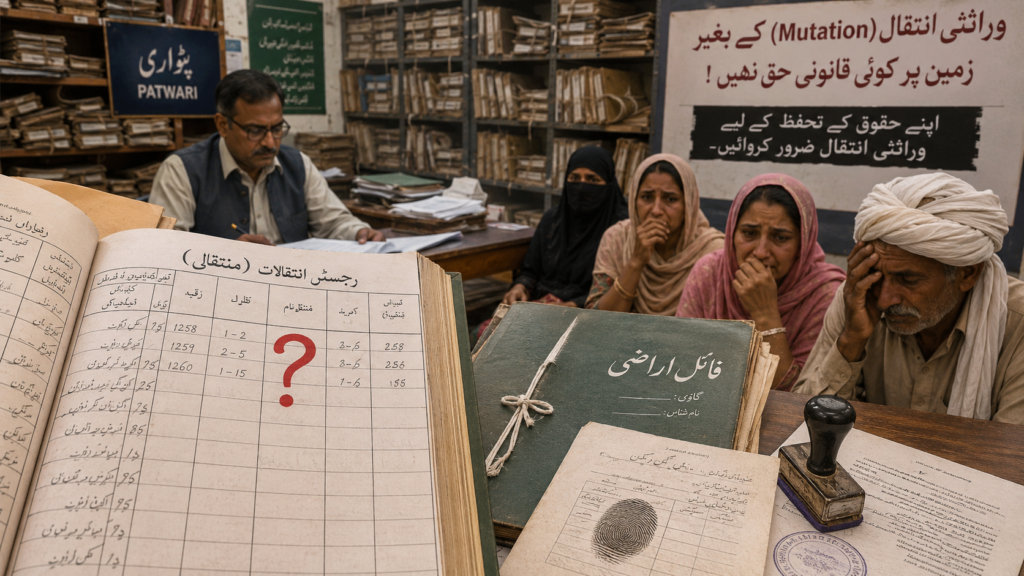
The dispute was about whether the sale mutations based on the power of attorney were lawful. Mst. Siraj Bibi rejected the transactions and filed a suit for declaration and cancellation. She argued that her brother had misused the authority given to him.
The Trial Court decreed the suit in her favour. The decision was upheld throughout the litigation. The Supreme Court also noted that three concurrent decisions had already been upheld when the civil petition for leave to appeal was dismissed earlier.
The painful part is that Mst. Siraj Bibi could not get the practical benefit of the decisions during her lifetime. She passed away while still deprived of the land and its produce. Her legal heirs then continued the litigation. This shows how Power of Attorney Misuse in Pakistan can push a rightful owner into years of struggle.
Petitioners’ Arguments in Power of Attorney Misuse in Pakistan
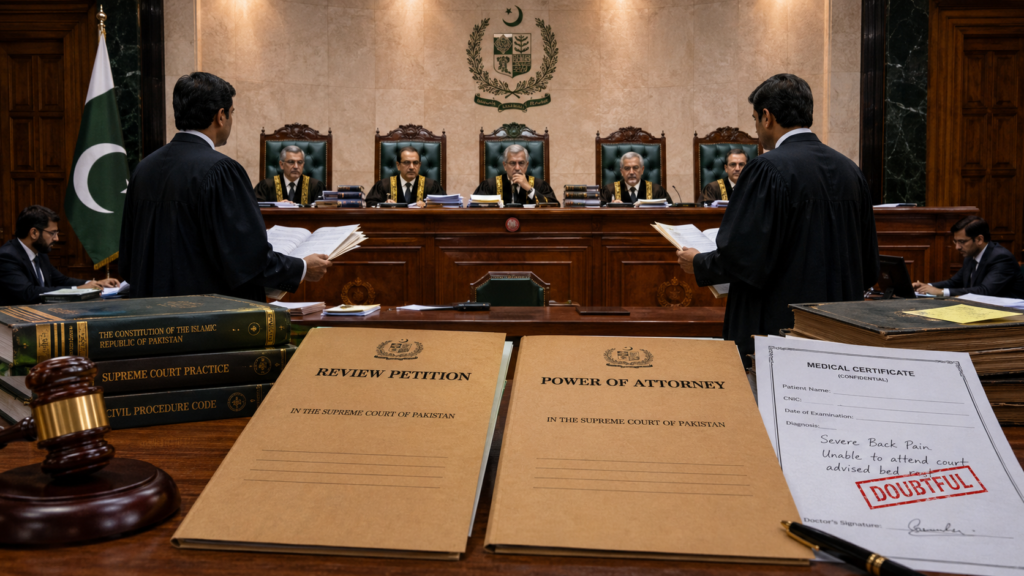
The petitioners were the side claiming through the alleged sale mutations. Their position was that the land had been transferred through a power of attorney and the transactions should be protected. They wanted the Supreme Court to review the earlier order.
At one stage, their civil review petition was dismissed for non-prosecution on 27 April 2023. They filed an application for restoration and claimed that counsel was indisposed. A medical document was attached, but the Court noticed that the document itself stated “Not Valid for Court.” The Court said that when a document itself says it is not valid for court, reliance cannot be placed on it.
However, in the interest of justice, the Court restored the review petition and heard it. This is important because the Court did not decide the matter only on technical default. It gave the petitioners an opportunity, considered the matter, and then rejected their case on merits.
Respondents’ Position on Power of Attorney Misuse in Pakistan
The respondents were the legal heirs of Mst. Siraj Bibi. Their case was based on the original challenge made by her. They stood on the position that the power of attorney had been misused, the attorney had no specific authority to sell the land to his sons, and the sale mutations were liable to be cancelled.
Although no one appeared for the respondents at the final hearing, the record was strong. The Trial Court had already decreed the suit, and the decision had been upheld throughout. The Supreme Court agreed that Mst. Siraj Bibi was entitled to repudiate the transaction under section 215 of the Contract Act, 1872.
This part is very important for people facing Power of Attorney Misuse in Pakistan. Even if a transaction appears in revenue record, the real question remains: did the attorney have lawful and specific authority?
Questions Considered by the Court
The Supreme Court did not frame a separate numbered list of issues, but the judgment clearly revolved around these questions:
| Court Question | Why It Mattered |
|---|---|
| Did the power of attorney specifically allow sale to the attorney or his sons? | Without specific authority, such a transaction becomes doubtful and challengeable. |
| Could the principal repudiate the transaction? | Section 215 of the Contract Act allowed Mst. Siraj Bibi to reject the misuse. |
| Were the sale mutations lawful? | The Court found the transfer was in derogation of section 42 of the Land Revenue Act, 1967. |
| Were women’s property rights involved? | The Court emphasized extra care in matters involving women’s property. |
| Was Article 24(1) violated? | The Court held that deprivation of property without lawful basis violated constitutional protection. |
| What relief was necessary? | Possession and costs were ordered to correct the injustice. |
What the Supreme Court Said About Power of Attorney Misuse in Pakistan
The Supreme Court held that Fayaz Ahmed Khan had misused the power of attorney. The power of attorney did not specifically authorize sale of the land in favour of the attorney or his sons. Therefore, Mst. Siraj Bibi could repudiate the transaction.
The Court used strong language. It described the conduct of the attorney and his sons as deplorable and reprehensible. The Court said that a sister and aunt was illegally deprived of her land. This was not treated as a simple technical mistake. It was treated as a serious abuse of trust and property rights.
The Court also observed that vulnerable members of society are often exploited by dubious methods, and then they spend a lifetime trying to regain what is rightfully theirs. This sentence captures the real pain behind many land disputes in Pakistan.
For that reason, Power of Attorney Misuse in Pakistan must be understood not only as paperwork fraud, but also as a cause of long litigation, family damage, and financial loss.
Section 215 Contract Act: Why It Was Important
For readers who want to understand the legal basis directly, section 215 belongs to the Contract Act of 1872. This law explains how an agent must act honestly and within the authority given by the principal. In cases of Power of Attorney Misuse in Pakistan, this provision becomes important because an attorney cannot use authority for personal or family benefit without proper legal permission.
Section 215 of the Contract Act, 1872 was central to the judgment. The principle is simple: an agent cannot secretly use his authority for his own benefit or for the benefit of connected persons without proper consent and disclosure. If he does, the principal can repudiate the transaction.
In this case, Fayaz Ahmed Khan was the attorney. His sister was the principal. The sale was not made to an independent outsider. It was made to the attorney’s own sons. This created an obvious conflict of interest.
The Supreme Court accepted that Mst. Siraj Bibi could repudiate the transactions. This is a major lesson for every property owner. If the attorney goes beyond authority, the principal is not helpless. The law provides a remedy.
This makes section 215 a powerful tool against Power of Attorney Misuse in Pakistan.
Section 42 Land Revenue Act and Illegal Mutation
The Court also held that the purported sale or transfer was effected in derogation of section 42 of the Land Revenue Act, 1967. Mutation entries must have a lawful basis. A mutation cannot protect a transaction that is itself illegal or unauthorized.
The Court made serious observations about revenue officers and officials. It said they were either complicit in recording the illegal mutations or incompetent. It further observed that such officers undermine the credibility of the record of rights and destroy lives.
This observation is very useful for legal awareness. Many people believe that once mutation is entered, ownership is final. This is wrong. If mutation is based on fraud, misuse of authority, or an unauthorized document, it can be challenged.
In cases of Power of Attorney Misuse in Pakistan, revenue record must be checked carefully, especially where the transaction benefits the attorney’s own family.
Article 24(1): Constitutional Protection of Property
Article 24(1) of the Constitution of Pakistan says that no person shall be deprived of property except in accordance with law. The Supreme Court found that the petitioners and their predecessor violated this constitutional protection.
This makes the judgment stronger. The case was not limited to cancellation of mutation. The Court connected the wrongful deprivation of land with constitutional property rights.
When a person is deprived of land through misuse of documents and illegal revenue entries, the law must protect the real owner. The Supreme Court’s message is clear: property cannot be taken away by clever paperwork, family pressure, or manipulated mutations.
This is why Power of Attorney Misuse in Pakistan is a serious legal issue for courts, revenue officers, lawyers, and property owners.
Women’s Property Rights and Extra Care

The Court emphasized that extra care must be exercised in matters involving women’s property. It referred to earlier Supreme Court judgments where the same principle had been repeated. The Court also referred to the frequent practice of male heirs resorting to fraud and tactics to deprive female heirs of inheritance.
This observation is directly connected with the social reality of Pakistan. Women are often pressured to sign documents, waive rights, give thumb impressions, or trust male relatives with property matters. Later, they discover that land has been transferred, mutated, or sold.
You may also read our related guide on Female property rights in Pakistan to understand how courts protect female owners in property disputes.
The judgment therefore protects more than one individual. It protects the broader principle that women’s property cannot be taken lightly. In every case of Power of Attorney Misuse in Pakistan involving a woman, courts and revenue officers must examine the transaction with caution.
Final Decision in Power of Attorney Misuse in Pakistan
The Supreme Court dismissed the civil review petition. It directed the petitioners to immediately hand over possession of the subject land to the respondents, who were the legal heirs of Mst. Siraj Bibi.
The Court further directed that if the petitioners did not voluntarily hand over possession, the concerned revenue authorities should immediately dispossess them. This made the relief practical and enforceable.
The Court also imposed Rs. 1,000,000 costs on the petitioners because of their unreasonable conduct. Until payment, the amount was to remain a charge on their landholding.
This final order is one of the strongest parts of the judgment. The Court did not merely say that the respondents were right. It ordered possession, costs, and compliance by revenue authorities.
Practical Checklist for Victims of Power of Attorney Misuse in Pakistan
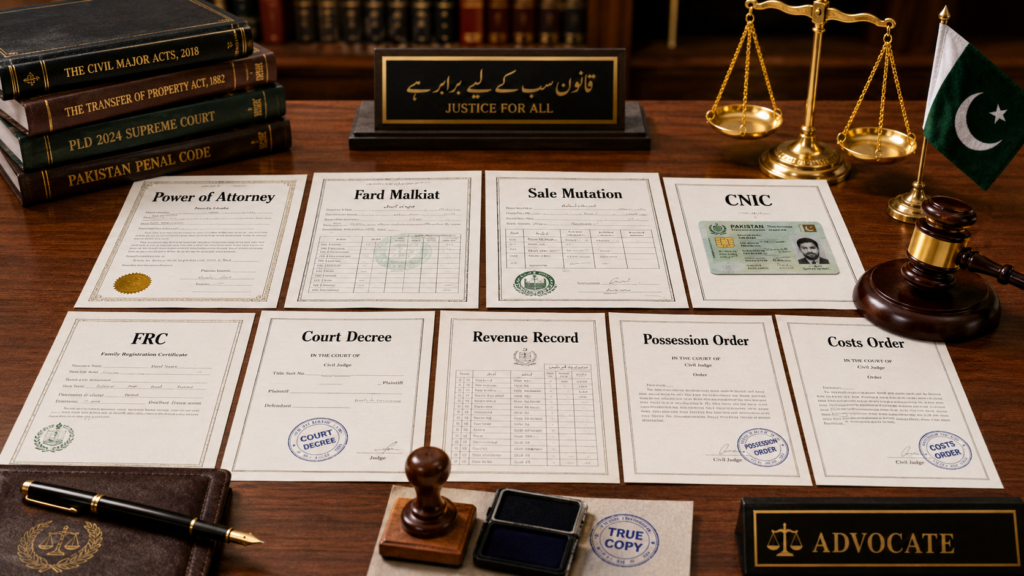
| Document | Purpose |
|---|---|
| Power of Attorney | To check the exact authority given to the attorney. |
| Sale Mutation | To identify how and when the transfer was recorded. |
| Fard Malkiat | To prove previous ownership and current revenue status. |
| CNIC and FRC | To establish identity and family relationship. |
| Death Certificate | Required if the original owner has passed away. |
| Certified Court Copies | To prove earlier decrees, orders, or litigation history. |
| Revenue Record | To examine mutation chain and record of rights. |
| Witness Evidence | To prove fraud, lack of consent, or misuse. |
| Legal Notice | To show timely objection and repudiation. |
A person facing Power of Attorney Misuse in Pakistan should collect these documents before filing a suit for declaration, cancellation, possession, or other appropriate relief.
Key Legal Lessons from Power of Attorney Misuse in Pakistan
| Lesson | Explanation |
|---|---|
| Power of attorney is not unlimited | The attorney must act within the exact authority given. |
| Sale to attorney’s relatives is suspicious | Courts examine such transactions with extra care. |
| Mutation is not final proof of ownership | Illegal or fraudulent mutation can be cancelled. |
| Women’s property needs extra protection | Courts recognize that women are often deprived through dubious methods. |
| Delay can destroy practical benefit | Legal action should be taken quickly after discovering misuse. |
| Costs can be imposed | Unreasonable conduct can result in heavy costs. |
Conclusion
The Supreme Court judgment in 2024 SCMR 978 is a powerful authority on Power of Attorney Misuse in Pakistan. It teaches that an attorney cannot use trust as a cover for personal gain. If a power of attorney does not specifically authorize sale to the attorney or his children, such a transaction can be challenged and repudiated.
Mst. Siraj Bibi’s case is painful because she won the legal battle but remained deprived of her land during her lifetime. The Supreme Court recognized this injustice, condemned the conduct of the attorney and his sons, ordered possession to her legal heirs, and imposed Rs. 1,000,000 costs.
The message is clear: family trust cannot override law, mutation cannot protect fraud, and women’s property rights deserve extra care. Power of Attorney Misuse in Pakistan must be challenged with proper documents, timely action, and strong legal grounds.
Disclaimer
This article is for legal awareness and educational purposes only. It is not legal advice. Property disputes depend on documents, dates, limitation, revenue record, and evidence. Always consult a qualified lawyer before taking legal action.
FAQs on Power of Attorney Misuse in Pakistan
What is Power of Attorney Misuse in Pakistan?
Power of Attorney Misuse in Pakistan means using a power of attorney beyond the authority given by the real owner. If an attorney uses the document to transfer, sell, or mutate property for personal benefit without clear permission, the transaction can be challenged in court.
Can an attorney sell property to his own sons in Pakistan?
An attorney cannot sell the principal’s property to his own sons unless the power of attorney clearly and specifically allows such a transaction. In 2024 SCMR 978, the Supreme Court held that the attorney had misused the power of attorney because it did not specifically authorize sale in favour of the attorney or his sons.
What did the Supreme Court decide in this case?
The Supreme Court dismissed the review petition, directed the petitioners to immediately hand over possession of the land to the legal heirs of Mst. Siraj Bibi, and imposed Rs. 1,000,000 costs on the petitioners due to their unreasonable conduct.
Why was the sale mutation declared illegal?
The sale mutation was considered illegal because the power of attorney did not specifically authorize the attorney to transfer the woman’s land to his own sons. The Supreme Court also found that the transfer was made in derogation of section 42 of the Land Revenue Act, 1967.
Can a woman challenge misuse of power of attorney after mutation?
Yes. Mutation does not cure an illegal or unauthorized transaction. If a woman’s property is transferred through Power of Attorney Misuse in Pakistan, she can file a suit for declaration, cancellation of mutation, possession, and other appropriate relief.
Which law helps the real owner in power of attorney misuse cases?
Section 215 of the Contract Act, 1872 is very important. It allows the principal to repudiate a transaction where the agent acts for personal benefit or against the interest of the principal without proper authority and disclosure.
Does mutation prove final ownership in Pakistan?
No. Mutation is mainly a revenue entry. If mutation is based on fraud, misuse of authority, or an invalid transaction, it can be challenged before the competent court.
Why did the Supreme Court mention women’s property rights?
The Supreme Court said that extra care must be exercised in matters involving women’s property. The Court recognized that women are often deprived of property through fraud, pressure, misuse of documents, and illegal mutations.
What happens if a person illegally keeps possession after losing the case?
The court can order immediate possession to the rightful party. In this case, the Supreme Court directed that if the petitioners did not hand over possession, the revenue authorities should immediately dispossess them.
Can costs be imposed in Power of Attorney Misuse in Pakistan cases?
Yes. If the court finds that a party acted unreasonably or illegally retained property, costs can be imposed. In this judgment, the Supreme Court imposed Rs. 1,000,000 costs on the petitioners.
What documents are needed to challenge the misuse of a power of attorney?
Important documents include the power of attorney, sale mutation, fard malkiat, revenue record, CNIC, FRC, court decree if any, witness evidence, and proof showing lack of consent or misuse of authority.
What is the main lesson from 2024 SCMR 978?
The main lesson is that a power of attorney is not a blank cheque. An attorney must act within the exact authority given by the owner. If he misuses trust to transfer property to himself or his close family, the court can cancel the illegal transaction, restore possession, and impose costs.