
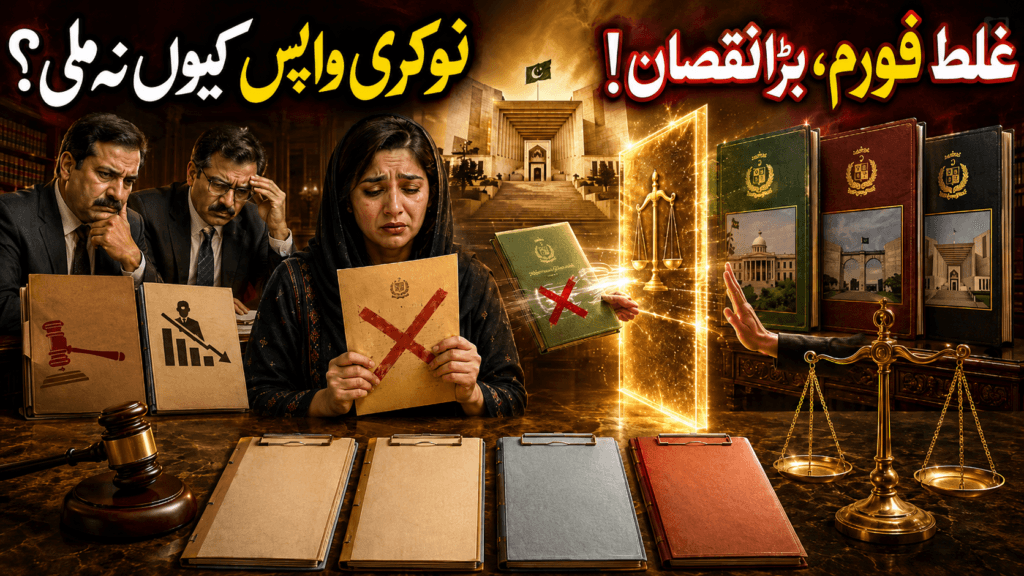
A woman files a workplace harassment complaint. While that complaint is pending, she faces a charge sheet, a show-cause notice and termination. The Federal Ombudsman later gives her major relief: the departmental proceedings are set aside, two officers are penalised, a fine of Rs.100,000 is imposed and she is reinstated. It appears that justice has finally arrived.
But the relief does not survive.
The President of Pakistan reverses the order. The Islamabad High Court maintains that decision. Finally, the Supreme Court dismisses the employee’s petition. The reason is not simply that the Court disbelieved every grievance. The decisive problem was jurisdiction: the harassment forum could not use the Women Harassment Act to decide an independent service dispute or restore a job after the termination order had already become final.
The case, Nadia Naz v. President of Islamic Republic of Pakistan, reported as PLD 2021 Supreme Court 784, was decided by a three-member Supreme Court bench on 5 July 2021. It is essential for employees, employers, HR departments and lawyers. It explains the difference between workplace harassment proceedings and service remedies. It also shows why the wording of a statute, the date of the alleged conduct and the correct legal forum can determine the entire case.
Table of Contents
IRAC Analysis of the Women Harassment Act Case
| IRAC element | Simple explanation |
|---|---|
| Issue | Did the definition of harassment under the law then in force cover every form of workplace mistreatment? Could the Federal Ombudsman set aside departmental proceedings and reinstate the petitioner? |
| Rule | Under the unamended section 2(h), the actionable conduct had to fall within the statutory definition connected with sexual conduct or sexually demeaning behaviour. The Act did not empower the Ombudsman to adjudicate a separate termination or departmental service dispute. |
| Analysis | Nadia Naz complained of harassment and alleged victimisation through departmental action. However, she did not directly challenge her termination before a competent service, civil or constitutional forum. The Ombudsman nevertheless set aside that action and ordered reinstatement. |
| Conclusion | The Supreme Court held that the Ombudsman had exceeded the limits of the statute. The President’s order and Islamabad High Court judgment were maintained, and the petition was dismissed. |
Judgment at a Glance: Women Harassment Act Case
| Detail | Information |
|---|---|
| Case title | Nadia Naz v. President of Islamic Republic of Pakistan and others |
| Citation | PLD 2021 Supreme Court 784 |
| Court | Supreme Court of Pakistan |
| Bench | Mushir Alam, Yahya Afridi and Qazi Muhammad Amin Ahmed, JJ. |
| Author judge | Justice Mushir Alam |
| Decision date | 5 July 2021 |
| Petition | Civil Petition No. 4570 of 2019 |
| Earlier judgment | Islamabad High Court judgment dated 11 October 2019 in W.P. No. 2948 of 2018 |
| Main law considered | Protection against Harassment of Women at the Workplace Act, 2010 |
| Key provisions | Sections 2(h), 4(4), 8 and related provisions |
| Main questions | Scope of actionable harassment and power of the Ombudsman to order reinstatement |
| Final result | Petition dismissed; reinstatement direction remained set aside |
Women Harassment Act Background: From PTV to the Supreme Court
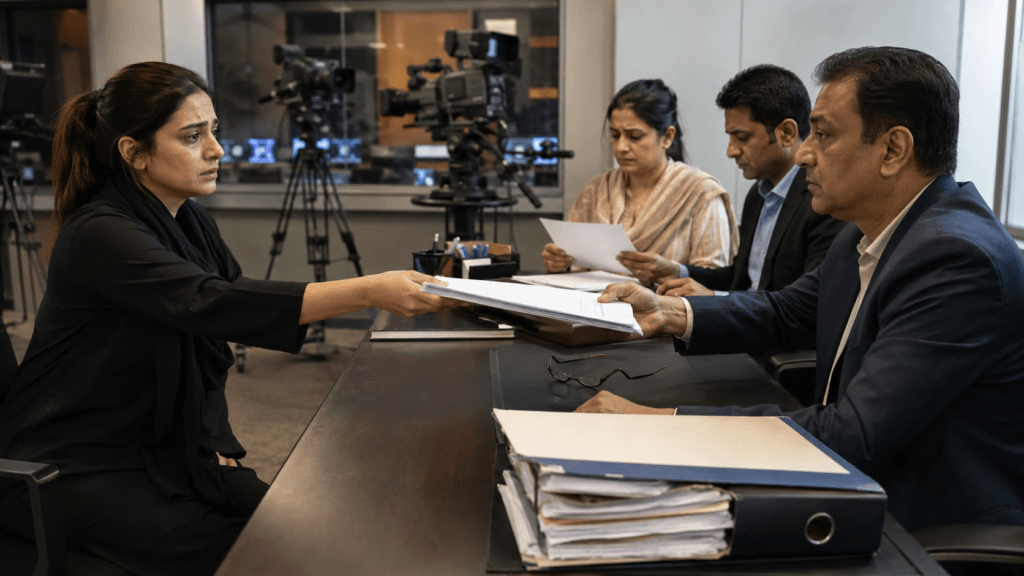
Nadia Naz was appointed on 4 September 2007 as a temporary Resource Person in the Camera Department of Pakistan Television. On 8 March 2016, she filed a workplace harassment complaint before the Federal Ombudsman against two officials.
During the pendency of that complaint, the department proceeded against her. She was charge-sheeted, served with a show-cause notice and ultimately terminated. The reported judgment states that she did not challenge the termination before any competent forum. As a result, the termination attained finality.
This fact became central to the Women Harassment Act dispute. Nadia Naz continued submitting applications before the Ombudsman and complained about the departmental proceedings, but she did not institute a direct legal challenge against the termination order itself.
There is an apparent date inconsistency in the reported text. It mentions termination with effect from 13 May 2017 through an order dated 17 May 2016. A careful legal article should preserve the dates as reported rather than silently changing the judicial record.
The Women Harassment Act Order That Restored Her Job

On 16 October 2017, the Federal Ombudsman treated the departmental inquiry and related action as part of the alleged harassment. The Ombudsman ordered proceedings against Saeed Ather, Controller Administration and Personnel, and Abdul Rashid, Controller.
The order directed that their promotions be withheld for two years. It also imposed a fine of Rs.100,000, payable to Nadia Naz. Most importantly, the departmental disciplinary proceedings were set aside and she was reinstated in service.
The Ministry of Information was further directed to investigate the alleged continuing harassment and take action against the persons responsible. For the complainant, this was a complete victory under the Women Harassment Act: punishment of officials, compensation and restoration of employment.
However, an inter-departmental inquiry commission had separately reported on 5 July 2017 that no incident of harassment had taken place. The conflicting findings later came under scrutiny before the appellate authority.
Why the President Reversed the Women Harassment Act Relief
The two affected officers challenged the Ombudsman’s order before the President of Pakistan. Nadia Naz also filed seven complaints or representations. The record was examined and the matters were decided together.
The President concluded that the dispute revolved around discipline, administration and service matters rather than harassment within the statutory definition then applicable. The officials’ representations were accepted, while the complainant’s position was rejected.
Importantly, Nadia Naz was not left without any possible remedy. The President stated that she could pursue her service or administrative grievance before the competent forum under the law. In other words, the problem was not merely the existence of a grievance; it was the use of the Women Harassment Act to obtain relief that belonged to a different legal jurisdiction.
How the High Court Read the Women Harassment Act
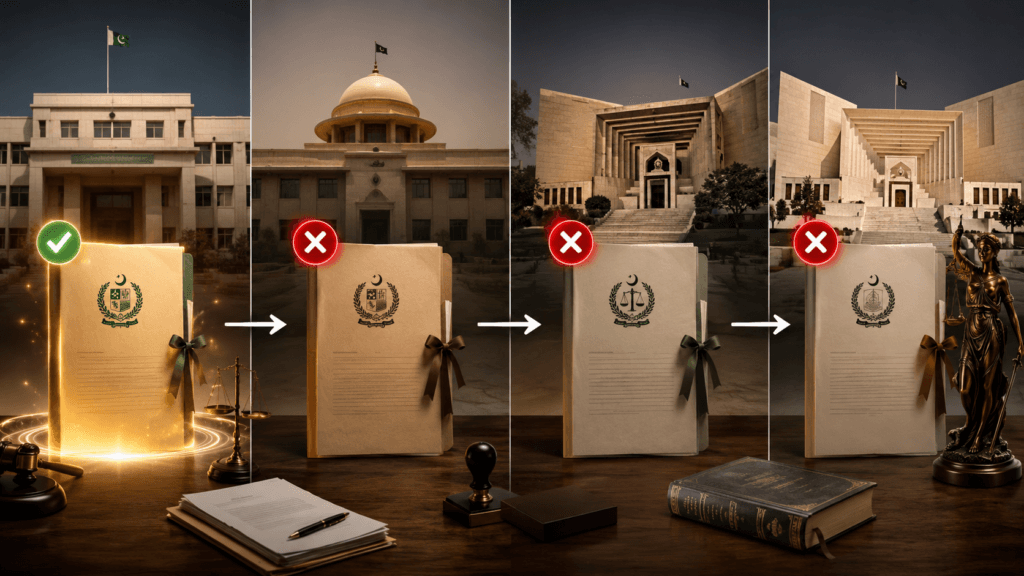
Nadia Naz challenged the President’s order dated 5 January 2018 before the Islamabad High Court. The High Court upheld the order through its judgment dated 11 October 2019.
The High Court distinguished harassment in the ordinary sense from harassment specifically made actionable under section 2(h) as it stood at that time. It concluded that the statutory case had not been established and that the Federal Ombudsman had no jurisdiction to order reinstatement.
The dispute then reached the Supreme Court through Civil Petition No. 4570 of 2019.
Two Questions Framed by the Supreme Court
The Supreme Court identified two questions requiring determination:
- Was actionable harassment under section 2(h) restricted in scope, or did it extend to every manifestation of workplace harassment?
- Did the Federal Ombudsman have the authority to reinstate the petitioner under the Women Harassment Act?
These questions were connected but legally distinct. The first concerned the type of conduct covered by the statute. The second concerned the remedies that the statutory forum could lawfully grant.
Arguments Presented by Nadia Naz
The petitioner argued that she had been harassed by colleagues and then victimised after approaching the Ombudsman. According to her case, instead of taking action against the alleged harassers, the department initiated unnecessary disciplinary proceedings and terminated her service.
Her counsel maintained that the Ombudsman had correctly examined the full course of conduct, penalised the responsible officers and restored her employment. The petitioner therefore asked the Supreme Court to set aside the decisions of the President and Islamabad High Court and revive the original order.
Her argument presented the departmental action as retaliation linked with the harassment complaint. If accepted, the Women Harassment Act proceedings could have restored both her position and the practical benefits of continued service.
Arguments Presented by the Respondents
The respondents argued that the Ombudsman’s authority arose only when harassment falling within the statutory definition was proved. General disciplinary, administrative or service matters could not be converted into actionable harassment merely because they occurred after a complaint.
They also argued that the statute did not authorise the Federal Ombudsman to set aside departmental proceedings or reinstate a terminated employee. Such relief had to be claimed before the legally competent forum.
A further point was decisive: Nadia Naz had never directly challenged the termination despite being told that a service remedy remained available. The order had therefore become final and could not be indirectly removed through the Women Harassment Act case.
Evidence Required in a Women Harassment Act Case
The reported judgment refers to the following material:
- the temporary appointment as Resource Person;
- the workplace harassment complaint dated 8 March 2016;
- departmental proceedings initiated during the complaint;
- the charge sheet and show-cause process;
- the termination order;
- repeated applications submitted before the Ombudsman;
- the Ombudsman’s order dated 16 October 2017;
- the Rs.100,000 fine and two-year promotion penalty;
- the inter-departmental inquiry report dated 5 July 2017;
- representations before the President;
- the President’s order dated 5 January 2018; and
- the Islamabad High Court judgment.
For another important Supreme Court ruling involving workplace dignity, disciplinary proceedings and legal protection, read our detailed guide on Women Harassment Law in Pakistan.
The case demonstrates why documents must be placed within the correct legal proceeding. Evidence of harassment may support a statutory complaint, while a termination order, service rules and inquiry record may require a separate service or constitutional challenge.
What the Women Harassment Act Meant in 2021
At the time relevant to Nadia Naz’s case, section 2(h) focused on unwelcome sexual advances, requests for sexual favours, sexual communication or physical conduct, sexually demeaning attitudes, a hostile work environment connected with such conduct and retaliation for refusal.
The complete statutory framework can be reviewed in the official Protection Against Harassment of Women at the Workplace Act, 2010, published in the Pakistan Code by the Ministry of Law and Justice.
The Supreme Court held that unpleasant, insulting or damaging workplace behaviour was not automatically actionable under that version of the Women Harassment Act. The conduct had to possess the statutory sexual character or connection.
The Court openly recognised that harassment can take many forms and may be based on race, gender, religion, disability, sexual orientation or age. It also acknowledged the humiliating and destructive effect of hostile conduct. Yet the Court held that it could not enlarge a penal or charging provision beyond the language Parliament had enacted.
This is an important point of statutory interpretation: the title or broad purpose of a law cannot replace the exact wording of its operative definition.
Why the Ombudsman Could Not Reinstate the Employee
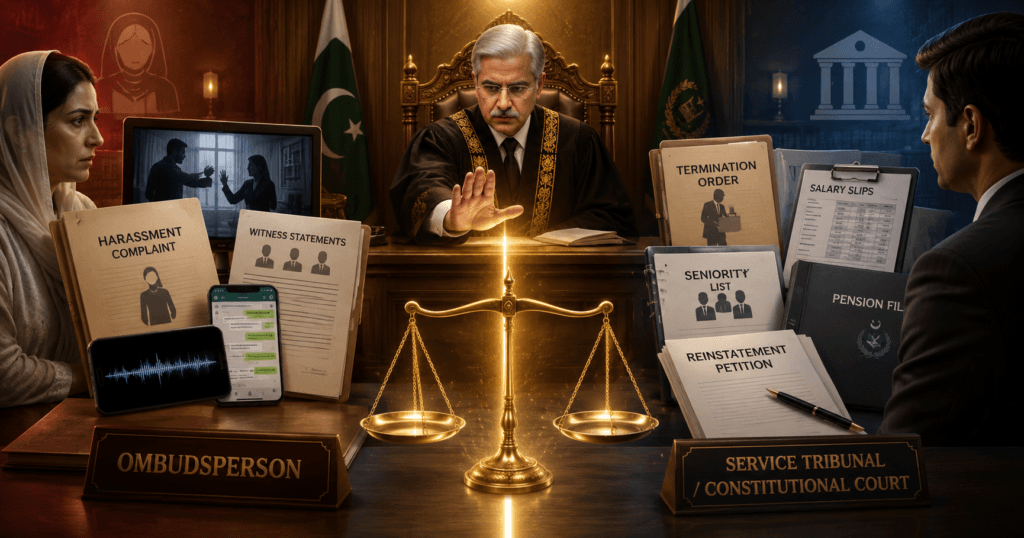
The Supreme Court then examined the second and more practical question. It found that no provision of the 2010 Act empowered the Federal Ombudsman to reinstate an aggrieved employee.
The Ombudsman could inquire into actionable harassment and exercise the powers given by the statute. But the forum could not decide the legality of independent departmental proceedings, annul a termination order or act as a general service tribunal.
The departmental action could have been challenged before an appropriate Civil Court, in constitutional jurisdiction or before a Service Tribunal, depending on the legal status of the employee and employer. Because that route was not used, the termination remained intact.
This part of the Women Harassment Act judgment has continuing importance. A person may have overlapping complaints, but every authority can grant only the relief permitted by its governing law.
The Most Serious Mistake: Leaving Termination Unchallenged
The case’s strongest practical lesson is that filing a harassment complaint does not automatically challenge a termination order.
A complainant may believe that the disciplinary action is retaliation. Even then, the employee should obtain immediate advice on whether a separate appeal, representation, labour claim, service petition, constitutional petition or civil action is required.
Limitation periods do not necessarily stop merely because another complaint is pending. Where the termination is not challenged, it may attain finality. Once that happens, recovery of salary, seniority, promotion, pension or reinstatement can become much more difficult.
The Women Harassment Act cannot safely be treated as a universal replacement for labour and service remedies.
How the 2022 Women Harassment Act Amendment Changed the Law
This judgment was delivered on 5 July 2021 and interpreted the law as it stood before the 2022 amendment.
The Protection against Harassment of Women at the Workplace (Amendment) Act, 2022 received presidential assent on 21 January 2022 and came into force immediately. It materially expanded the law.
The amended definition now includes stalking, cyberstalking, wider verbal, visual and written conduct, and discrimination on the basis of gender that may or may not be sexual in nature.
It also broadened the categories of employees and complainants. Former employees who were removed, dismissed or resigned were expressly included, along with many temporary, gig, freelance, student, domestic and home-based workers.
The definition of workplace was also widened to include educational institutions, studios, courts, highways, sporting facilities, online-linked work and situations connected with work outside the office.
Accordingly, it would be legally wrong to present the 2021 restrictive definition as the complete current position under the Women Harassment Act.
Did the 2022 Amendment Give a General Power of Reinstatement?
The 2022 amendment broadened coverage and definitions, but it did not expressly turn the Ombudsperson into a general service tribunal.
The amendment added categories of complainants and workers, widened actionable harassment, recognised audio and video evidence, and introduced decision periods. However, it did not expressly create an unlimited power to decide every dismissal, seniority or departmental dispute. This is an inference from the text of the amendment.
Therefore, the safe legal position is not that reinstatement can never be connected with harassment, nor that it is automatically available in every case. The proper relief depends on the amended statute, the facts, the penalties legally available and any separate labour or service remedy.
Every current case should be assessed on its own record.
Supreme Court’s Final Women Harassment Act Decision
The Supreme Court held that Nadia Naz had failed to establish harassment within the definition applicable to her case. It also held that the Federal Ombudsman lacked jurisdiction to examine the departmental proceedings and order reinstatement.
The President’s order, as maintained by the Islamabad High Court, was found to be well reasoned. The Supreme Court therefore dismissed the petition.
The final result under the Women Harassment Act litigation was:
- the Ombudsman’s reinstatement direction remained set aside;
- the departmental termination was not disturbed;
- the penalties and compensation granted by the Ombudsman did not survive;
- the President’s decision remained effective; and
- the Islamabad High Court judgment was maintained.
Practical Women Harassment Act Case Checklist
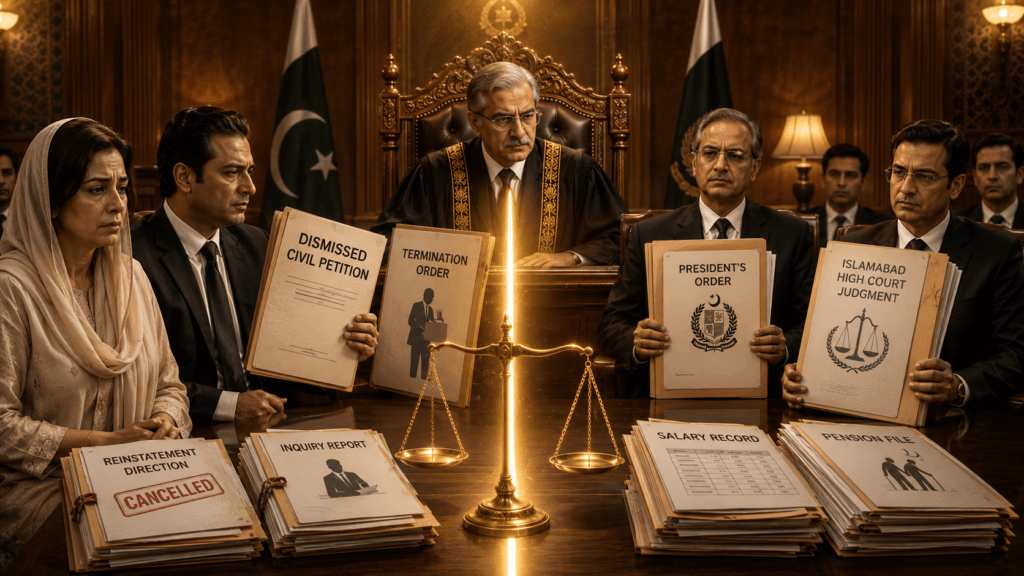
A complainant should preserve:
- appointment letter or employment contract;
- complete service rules and HR policies;
- emails, messages and call records;
- screenshots with visible dates and numbers;
- audio or video evidence lawfully available;
- names and contact details of witnesses;
- complaint submitted to the Inquiry Committee or Ombudsperson;
- acknowledgment or diary number;
- charge sheet and show-cause notice;
- written replies submitted during the inquiry;
- inquiry report;
- termination, removal or dismissal order;
- proof of the date each order was received;
- salary, promotion, seniority and pension records; and
- copies of every appeal, representation or petition.
A lawyer should separately identify the required relief. Punishment for harassment, compensation, reinstatement, unpaid wages and cancellation of a termination order may not always fall within one proceeding.
Mistakes Employees Should Avoid
- Do not leave a termination order unchallenged.
- Do not assume that a harassment complaint automatically protects limitation in a service case.
- Do not file before a forum without checking its statutory powers.
- Do not mix facts, dates and documents without a clear timeline.
- Do not rely only on oral allegations where digital or documentary evidence exists.
- Do not delete messages after taking incomplete screenshots.
- Do not ignore internal appeal procedures.
- Do not conceal earlier complaints, inquiries or court orders from counsel.
- Do not cite the 2021 definition as the complete current law.
- Do not treat every unpleasant workplace interaction as automatically proved harassment.
- Do not delay legal advice after receiving a charge sheet or dismissal order.
Duties Employers and HR Departments Should Not Ignore
- Maintain the legally required Inquiry Committee and code of conduct.
- Keep harassment proceedings separate from unrelated performance management.
- Avoid retaliatory action against a complainant or witness.
- Record genuine disciplinary reasons through an independent and transparent process.
- Preserve emails, CCTV, attendance and inquiry records.
- Give both sides a fair opportunity to present evidence.
- Protect confidentiality.
- Apply the amended definition rather than relying on outdated wording.
- Obtain legal advice before imposing penalties during a pending complaint.
- Ensure that every final order identifies the legal authority and available remedy.
Seven Powerful Lessons from the Judgment
- The correct forum can be as important as the strength of the grievance.
- A harassment complaint and a service challenge may require separate proceedings.
- An unchallenged termination order may attain finality.
- Statutory authorities cannot exceed powers granted by Parliament.
- The law applicable at the time of the alleged conduct must be identified.
- The 2022 amendment significantly broadened protection.
- Current cases should not be decided through an outdated reading of the Women Harassment Act.
Frequently Asked Questions
1. What Is the Official Name of the Women Harassment Act in Pakistan?
The commonly searched phrase refers mainly to the Protection against Harassment of Women at the Workplace Act, 2010.
“Women Harassment Act” is a useful search phrase, but the official statutory title should be used in complaints, legal opinions and court proceedings.
2. Can the Ombudsperson Reinstate Every Terminated Complainant?
No. Reinstatement is not automatic. The authority must have statutory power to grant the exact relief.
In Nadia Naz’s case, the Supreme Court held that the Ombudsman could not decide the independent departmental dispute or restore her service.
3. Can a Former Employee File a Harassment Complaint?
The 2022 amendment expressly includes a former employee who was removed, dismissed or resigned within the definition of complainant.
Whether the complaint succeeds depends on jurisdiction, limitation, evidence and the amended statutory definition.
4. Is Harassment Limited to Conduct of a Sexual Nature?
Not under the amended federal definition.
Gender-based discrimination may now be actionable even when it is not sexual in nature. Stalking and cyberstalking were also expressly added.
5. Does Filing a Harassment Complaint Challenge a Termination Order?
Not automatically.
A separate service, labour, constitutional or civil remedy may be required. Employees should seek advice immediately because limitation may continue to run.
6. Which Forum Should Hear a Wrongful Termination Case?
The correct forum depends on the employee’s legal status, the nature of the employer, governing service rules and applicable labour or statutory law.
It may be a departmental appellate authority, Labour Court, Service Tribunal, Civil Court or constitutional court.
7. Why Is PLD 2021 Supreme Court 784 Still Important?
The definition examined in the case was later broadened, but the judgment remains important for jurisdiction, statutory interpretation and the danger of leaving a termination order unchallenged.
It teaches employees that even a favourable order may fail where the authority granting it lacks power over the actual service dispute.
Conclusion
Nadia Naz initially obtained reinstatement, compensation and penalties against two officials. Yet the order disappeared because the Ombudsman had entered the field of departmental and service law without statutory authority.
The case does not teach that workplace grievances are unimportant. It teaches that every grievance must be matched with the correct remedy and forum.
Today, the definition is broader than the one considered in 2021. Gender-based discrimination may be actionable even when it is not sexual, and a wider range of workers and workplaces is protected.
Still, employees should never assume that one complaint will automatically cancel a termination order or restore every service right.
The enduring lesson of the Women Harassment Act case is simple: preserve the evidence, challenge every adverse order on time and never confuse a strong grievance with unlimited jurisdiction.
Disclaimer: This article is for legal awareness and general information only. It is not a substitute for advice from a qualified lawyer. Harassment, service and labour disputes depend on the current law, the employee’s legal status, limitation periods, evidence and the relief claimed.