

A written gift may appear enough to transfer property, but the law asks harder questions: Was it declared, accepted, and followed by delivery of possession? In a recent Supreme Court judgment, grandchildren relied on an old deed while the donor kept possession for life. The Court held that the gift was incomplete.
This decision is a warning for anyone relying on a gift deed in Pakistan. A document may look genuine, yet fail if the transfer is conditional, unregistered where registration is compulsory, unsupported by proper witnesses, or never followed by delivery of possession.
Table of Contents
IRAC Analysis: Why the Hiba Claim Failed
| Element | Summary |
|---|---|
| Issue | Whether the petitioners became owners through the deed dated 2 October 1988 and whether later inheritance mutations were invalid. |
| Rule | A valid Muslim gift requires declaration, acceptance, and delivery of possession. A document creating future rights may require registration, while a disputed attested document must be proved through legally required witnesses. |
| Analysis | The donor retained possession for life. The deed was unregistered, marginal witnesses were not produced, the scribe was not examined, and the exclusion of legal heirs was not explained. |
| Conclusion | The alleged gift failed. The Supreme Court refused leave to appeal and maintained the concurrent findings below. |
Judgment at a Glance: Gift Deed and Hiba Dispute
| Detail | Information |
|---|---|
| Case | Hidayat Khan and others v. Mst. Nasreen and others |
| Citation | PLD 2025 Supreme Court 502 |
| Court | Supreme Court of Pakistan |
| Bench | Syed Hasan Azhar Rizvi, Musarrat Hilali and Shahid Bilal Hassan, JJ. |
| Author Judge | Shahid Bilal Hassan, J. |
| Decision Date | 24 April 2025 |
| Case Number | C.P.L.A. No. 287-P of 2025 |
| Main Document | Alleged gift deed dated 2 October 1988 |
| Disputed Mutation | Mutation No. 7030, attested on 21 January 2014 |
| Result | Leave refused; petition dismissed |
Background of the Property Dispute
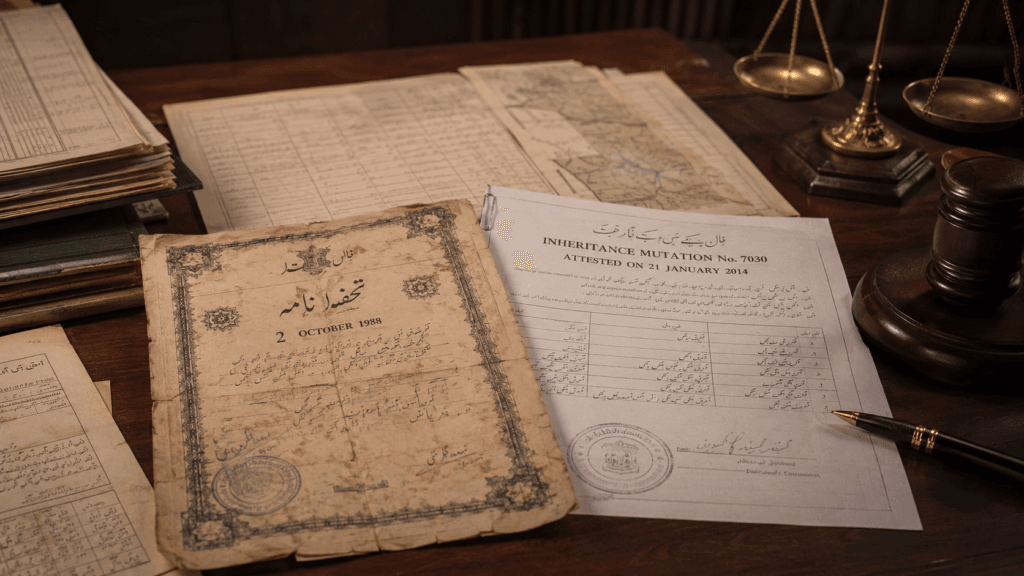
The petitioners claimed ownership through a deed allegedly executed by Dawai Khan on 2 October 1988. They also challenged Dawai Khan’s inheritance mutation and Mutation No. 7030, through which property was entered in favour of Mst. Nasrin Begum on 21 January 2014.
Madad Khan contested the case. The trial court dismissed the suit on 31 January 2019, the first appeal failed on 3 January 2022, and the Peshawar High Court dismissed the revision. The petitioners then approached the Supreme Court.
The central question was whether the alleged gift deed in Pakistan completed a lawful transfer or only promised ownership for the future.
Three Requirements of a Valid Muslim Gift

The Supreme Court repeated that a valid hiba requires:
- A clear declaration by the donor.
- Acceptance by the donee.
- Delivery of possession in pursuance of the gift.
All three conditions must exist. A gift deed in Pakistan does not become valid merely because it carries signatures or describes property. The beneficiary must prove the real transaction behind the paper.
Here, the deed itself showed that Dawai Khan would retain possession during his lifetime. The petitioners therefore did not receive possession when the deed was executed.
Why Retaining Possession Defeated the Gift
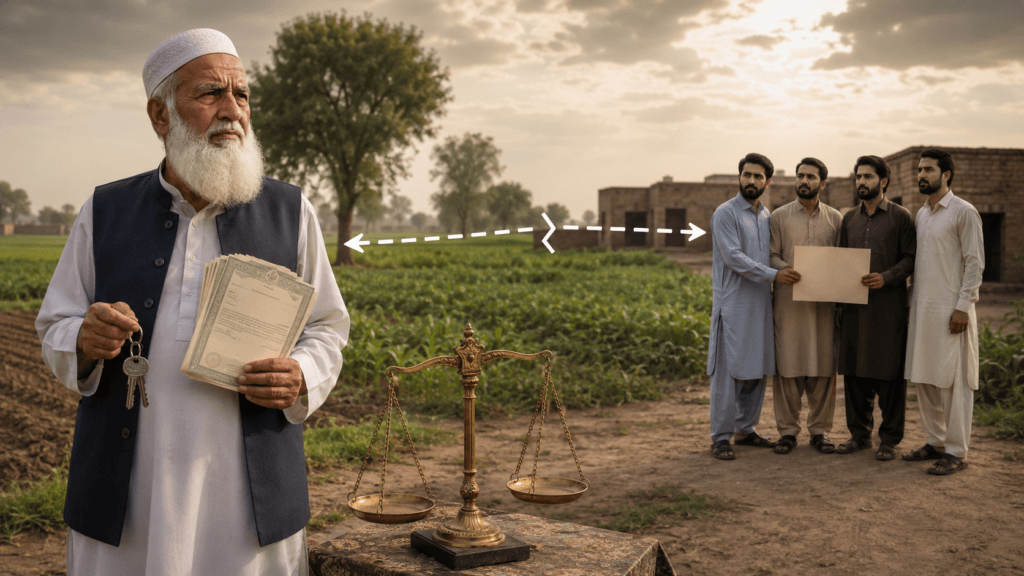
The donor’s continued possession showed that the transfer was intended to operate later rather than immediately.
A completed hiba transfers property during the donor’s lifetime. Here, effective possession was postponed until after the donor’s death. The Court treated the arrangement as conditional and held that one essential ingredient was missing.
Because the document created future rights and obligations, it required registration under section 123 of the Transfer of Property Act, 1882, read with section 49 of the Registration Act, 1908. Since it was unregistered, this gift deed in Pakistan could not create ownership.
Readers may review the official Transfer of Property Act, 1882 available on Pakistan Code for the statutory rules governing transfers of immovable property.
The Beneficiaries Carried a Heavy Burden
The beneficiary of a disputed gift carries a heavy burden, especially where natural legal heirs are excluded.
The petitioners had to explain why Dawai Khan would deprive his own legal heirs or sons and give the property to the petitioners, who were his grandsons or the sons of Murad Khan. They neither properly pleaded nor proved those circumstances.
This rule protects inheritance rights from doubtful family documents. Anyone relying on a gift deed in Pakistan must prove the paper, the transaction, and the reason for excluding legal heirs.
Why the Written Deed Was Not Proved
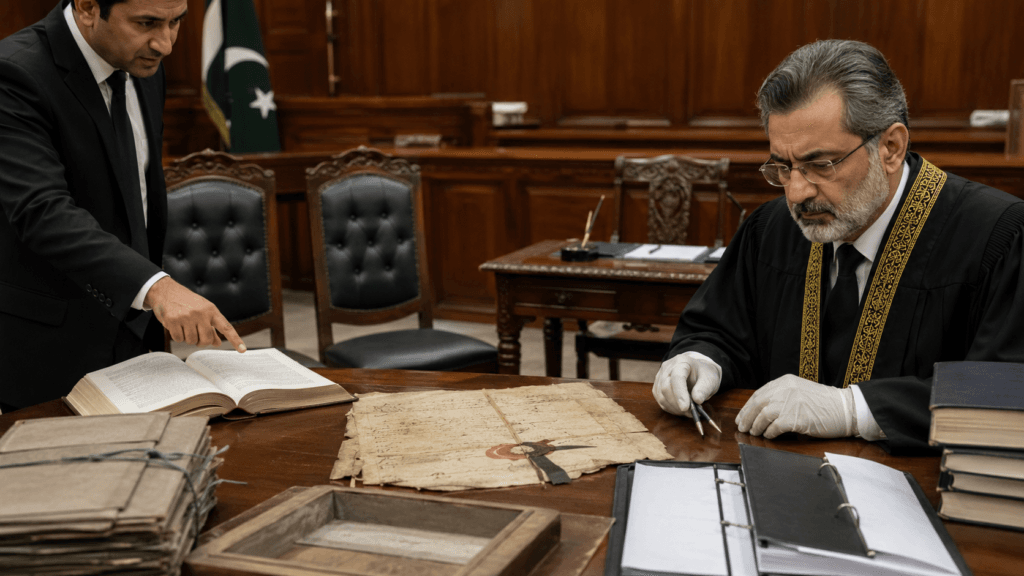
The deed also failed on evidentiary grounds. Under Article 79 of the Qanun-e-Shahadat Order, 1984, the petitioners had to produce two marginal witnesses because the document was disputed.
They produced neither witness and filed no application showing that the witnesses were dead, unavailable, or incapable of appearing. The scribe was not examined either. His grandson appeared and admitted that his father, the immediate successor of the scribe, was alive, yet the father did not testify. The scribe’s register was also not produced through proper custody.
These gaps made the alleged gift deed in Pakistan legally unreliable.
Mutation Cannot Replace Proof of the Gift
The Supreme Court restated that a mutation is not a title document. A revenue entry may record a transaction, but it cannot prove the original act by itself.
Whether the claim concerns sale, gift, tamleek, relinquishment, or will, the original transaction must be proved separately. A mutation cannot cure missing possession, absent witnesses, defective registration, or an incomplete transfer.
Many families assume that mutation settles ownership. This judgment confirms that a gift deed in Pakistan and its related revenue entry must both survive judicial scrutiny.
Where a donor denies the transaction or alleges fraud, our article on cancellation of gift deed in Pakistan explains how courts examine possession, consent and revenue mutations.
Constructive Possession of Legal Heirs
The Court also explained that possession by one sibling or legal representative may be treated as constructive possession for all legal heirs unless the opposite is proved.
Mere occupation by one family member does not automatically end the shares of the remaining heirs. This principle matters where an alleged gift deed in Pakistan is used to exclude lawful heirs.
Oral Gifts Need Complete Particulars
Although this case concerned a written deed, the Supreme Court also stated the rule for oral transfers. A person claiming an oral gift should clearly plead and prove:
- Date and time.
- Place of the transaction.
- Names of witnesses.
- Declaration by the donor.
- Acceptance by the donee.
- Delivery of possession.
Vague statements are not enough. A later mutation cannot save an oral gift that was never properly pleaded or proved.
Limitation Does Not Automatically End Inheritance Rights
The Court observed that mere passage of time does not automatically extinguish inheritance rights. In disputes involving inheritance and fraud, limitation may become less important where a doubtful transaction excludes a lawful heir.
This does not mean every delayed claim succeeds. It means the court should examine the original transaction and evidence instead of rejecting a genuine claim only because years have passed.
Arguments and Final Decision

The petitioners relied on the 1988 deed and asked the courts to declare them owners. They challenged the later inheritance entries. However, they could not overcome the missing possession, lack of registration, absence of marginal witnesses, failure to examine the scribe, and failure to explain the exclusion of legal heirs.
Three courts had already reached the same conclusion. The trial court dismissed the suit, the appellate court dismissed the appeal, and the High Court refused to interfere in revision.
The Supreme Court found no legal or factual error. The petitioners failed to prove a completed and enforceable gift deed in Pakistan. Leave to appeal was refused, and the petition was dismissed.
Practical Checklist Before Making a Gift
Before relying on a gift deed in Pakistan, confirm that the transaction is complete in substance:
- The donor clearly declares the gift.
- The donee clearly accepts it.
- Possession is delivered immediately.
- Independent witnesses are available.
- Registration is completed where required.
- The original deed and supporting record are preserved.
- Any exclusion of legal heirs can be honestly explained and proved.
A doubtful family paper cannot safely replace lawful inheritance.
Final Takeaway
This judgment shows that courts look beyond labels. A paper called a gift deed in Pakistan will not transfer ownership unless the donor completes the gift, possession changes hands, legal requirements are followed, and reliable evidence proves the transaction.
For families, the message is clear: complete the gift properly, act upon it immediately, and never use a doubtful transfer to defeat lawful inheritance rights.
Disclaimer: This article is for legal awareness only and is not a substitute for advice from a qualified lawyer.
Frequently Asked Questions
Is Every Muslim Gift Required to Be Registered?
Not every oral hiba requires registration. However, where a written document itself creates future rights in immovable property, a gift deed in Pakistan may require compulsory registration.
Can a Donor Keep Possession for Life?
Keeping possession may show that the transfer was not completed immediately. In this case, retaining possession made the gift conditional and incomplete.
Is Mutation Enough to Prove a Gift?
No. Mutation is a revenue entry, not proof of title. The original gift must be proved independently.
Who Must Prove a Disputed Gift?
The beneficiary relying on a gift deed in Pakistan carries the burden, particularly where natural legal heirs are excluded.